
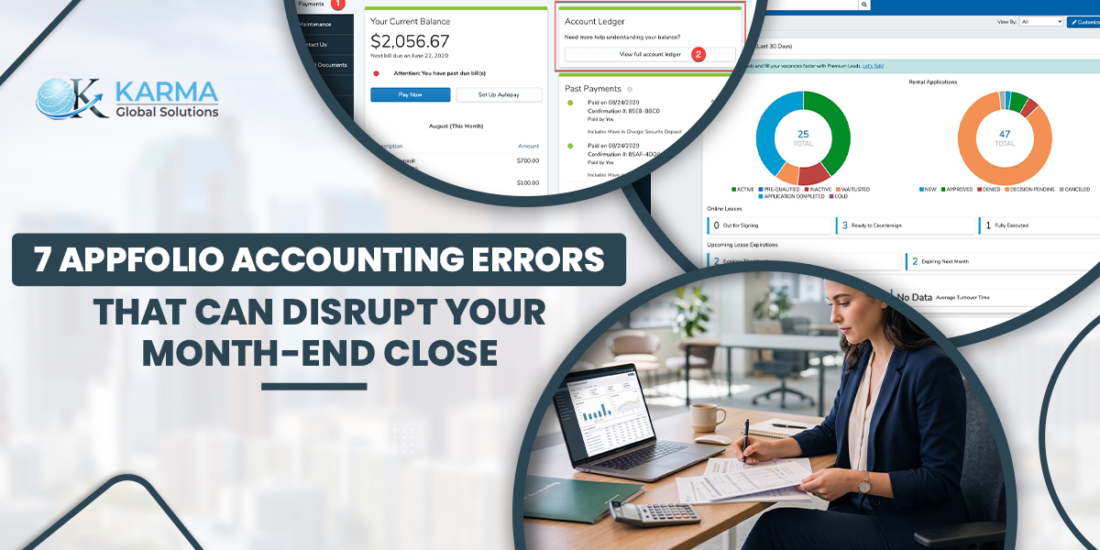
AppFolio Accounting Errors

7 AppFolio Accounting Errors That Can Disrupt Your Month-End Close

Closing your books at the end of the month shouldn’t feel like unraveling a giant mess, yet small slip-ups can quickly turn reporting week into a complete nightmare. At Karma Global Solutions, we practically help property managers to catch hidden AppFolio accounting errors early so your financial statements remain completely correct every single month.

Accounting Errors in AppFolio That You Can Easily See

1. Skipping Daily Bank Feeds

Waiting until month-end to match bank transactions create huge bottlenecks and buries your team in certain statement reconciliations.

a. Delays in Matching Statements:

You can observe unchecked line items accumulating fast, turning balance checks into unwanted forensic digging.

b. Overlooked Bank Fees:

Many people are charged with an unexpected service that is unnoticed, hence causing an unexpected ledger gaps during final audits.

c. Fixing AppFolio Bank Reconciliation:

Running up the daily matches could keep ledger entries fresh and catches bank discrepancies instantly. 

2. Incorrect Expense Allocations

Filling vendor bills under the wrong unit or building skews portfolio reporting and ruins financial accuracy.

a. Mishandled Unit Codes:

Fast invoice entry can leads to multi-unit repair bills that lands on single property ledgers.

b. Corrupted Owner Reports:

An inappropriate cost distribution can directly damage client’s trust and triggers painful manual fixes.

c. Preventing Your Property Management Accounting Errors:

Double-check unit codes during entry to safeguard balance sheets for all accounts.

3. Mismanaging Security Deposits

Mixing tenant deposit funds with operational cash creates severe legal risks and messes up balance totals.

a. Unsegregated Accounts:

Holding security funds in general bank accounts breaks property management compliance rules. 

b. Inaccurate Move-Out Deduction:

Wrong utility split-ups on tenant exit forms lead to misstated liability records. 

c. Clear Liability Audits:

Separate deposit ledgers carefully to maintain complete reporting transparency during every cycle. 

4. Delaying Accounts Payable

Holding incoming vendor bills in the email inboxes hides true operational expenses and inflates short-term cash views.

a. Unrecorded Vendor Bills:

Delayed entries conceal active obligations, leaving managers blond to upcoming payouts.

b. Missed Early Discounts:

Slow processing leads to duplicate billings and lost savings on vendor contracts.

c. Dedicated Accounts Payable Services:

Logging invoices upon receipt gives complete visibility into actual cash balances.

5. Unresolved Unapplied Cash

Tenant payments entered without matching charge items, generating overdue notices.

a. Unmatched Tenant Payments:

Rent money remains unassigned, confusing tenants who already paid their monthly dues.

b. Distorted Revenue Statements:

Unrecognized prepayments mess up income timing, altering monthly profit figures.

c. Routine Payment Reviews:

Match incoming tenant funds quickly to maintain in clean accounts receivables.

6. Overlooking Clearing Balances

Leaving uncleared balances in temporary holding ledgers creates persistent balance sheet discrepancies.

a. Unassigned Payment Balances:

Application fees and gateway money accumulate without periodic ledger checks.

b. Hidden System Differences:

Pending line items hide duplicate entries, making cash reconciliation frustratingly slow.

c. Eliminating AppFolio Reconciliation Errors:

Reviewing holding accounts daily stops hidden ledger balance problems.

7. Disregarding Owner Payout Rules

Sending owner payouts before verifying incoming rent payments causes negative balances and financial stress.

a. Premature Cash Payments:

Transferring funds before tenant rents clears forces managers to demand money back.

b. Skipped Holdback Reviews: 

Ignoring reserve requirements and fees creates unexpected operating deficits.

c. Following AppFolio Accounting Best Practices:

Verify all ledger items before releasing direct deposits to owners. 

How Professional Oversight Keeps Operating Smooth?

Managing multi-property accounts requires constant focus, yet manual error hunting wastes precious team hours. Partnering with real estate accounting specialists eliminates ledger backlogs, cleans up daily balances, and maintains full compliance for all portfolios.

a. Residential Real Estate Accounting Services:

Support to keep single-family and multi-family books balanced.

b. Commercial Real Estate Accounting Services: 

Expert tracking for complex commercial leases and annual CAM reconciliations.

Conclusion

Running a property management business requires total control over daily ledgers and balance statements. Partnering with Karma Global Solutions helps you address recurring accounting errors, protect client trust, and close your books easily every single month.

Frequently Asked Questions on AppFolio Accounting Errors That Can Disrupt Your Month-End Close

Q1. Why does the month-end close take so long?

A1. Basically, delays occur when teams skip daily bank feeds and leave unapplied tenant payments unassigned.

Q2. How do unapplied payments harm reporting?

A2. Unapplied cash hides actual tenant balances, showing fake arrears while distorting profit numbers.

Q3. When should managers get accounting support?

A3. To get support when balance sheet differences repeat and owner payouts face continuous delays.
Trust Accounting

10 Trust Accounting Red Flags Property Management Companies Should Address

Trust account trouble does not always start with a large missing balance. A negative owner ledger, an unexplained reconciliation gap, or a late-posted deposit can be the first warning. Property management teams keep these issues from carrying over into month-end reports.

Karma Global Solutions identifies ten red flags in trust accounting in property management, along with practical guidance on how to address them. 

What Is Trust Accounting?

Trust accounting tracks money a property manager holds for someone else. That may include rent, owner reserves, or tenant deposits. The records need to show who owns the money, where it is held, and how every dollar was used.

10 Property Management Trust Accounting Red Flags to Watch 

Small account issues can point to bigger problems if you leave them unchecked. These warning signs can help property managers find issues early and fix them before month-end.

1. Client Money Ends Up in the Operating Account

Owner funds and tenant money should not move through the company’s regular business account. Once funds are mixed, tracing ownership becomes harder and reporting becomes less reliable.

In property management trust accounting, every payment must be linked to the correct client or property. Keep client money in the correct trust account, and move fees only when the agreement and state rules allow it. 

2. The Three-Way Reconciliation Does Not Tie Out

A bank statement may look correct even when the books are not. That is why property management trust account reconciliation needs more than a bank-to-book check.

Compare the bank balance with the accounting balance and the combined client ledger balances. If one number is off, follow the difference back to the actual deposit, payment, transfer, or posting rather than forcing the accounts to match.

3. An Owner or Tenant Ledger Turns Negative

A negative balance is a sign that something in the ledger needs checking. A payment may have been entered twice, an expense may be under the wrong property, or an owner may have received more than the available balance.

Check the recent entries and find where the balance first went below zero. When these accounting errors in property management are fixed, incorrect amounts will not reach monthly reports. 

4. Security Deposits Cannot Be Traced Easily

A security deposit should have a clear path from the day it is received to the day it is returned or applied. Gaps appear when deposits are entered late, attached to the wrong tenant, or separated from the lease record.

Effective tenant security deposit accounting connects the deposit with the tenant ledger and supporting lease documents. Process handling requires meeting local compliance because each state differs in rules.

5. Reconciliations Depend on Plug Entries

A reconciliation should not need a new balancing entry every month. Repeated adjustments usually mean an older issue is still sitting in the books, such as a missed deposit, duplicate payment, or transaction posted to the wrong property.

For trust accounting in property management, trace the difference back to the first transaction that caused it. Correct that entry instead of carrying another unexplained adjustment into the next closing.

6. Payments Have No Supporting Documents

An entry becomes difficult to defend when nobody can find the invoice, approval, receipt, or agreement behind it. The same problem applies to refunds, owner transfers, and deposit activity.

Strong trust accounting compliance depends on records that connect directly to the transaction. Store documents by property and accounting period so another person can follow the entry without digging through emails or personal folders.

7. Deposits Appear Days After They Were Collected

A deposit date that does not match the tenant’s move-in date needs to be checked. Start with the lease, deposit ledger, and move-in records. One of them may show where the timing went wrong.

Teams using residential property accounting services should also check the deposit deadline for the state where the property is located.

8. Voided and Outstanding Checks Keep Piling Up

Old checks can remain unnoticed because they do not always stop the books from closing. The same attention is needed to check missing numbers and repeated voids.

Review outstanding items every month and match voided checks to invoices or payment records. Teams handling accounts receivable services already work from supporting detail; outgoing payments need that same level of traceability.

9. One Employee Controls the Whole Process

Receiving money, entering transactions, approving payments, and reconciling the bank account should not all depend on one person. A simple posting mistake may remain hidden when nobody reviews the work independently.

Real estate accounting services need to separate key duties or add a second review before reconciliations are approved and funds are released.

10. Old Credits and Unusual Payments Never Get Cleared

An old owner credit may stay in the books if no one knows why it is there. Old tenant balances and unknown vendor payments can cause the same issue. 

For teams managing commercial property accounting, each old balance needs an owner, a reason, and a next step. Review aging items before closing the month instead of carrying unexplained amounts into another reporting period.

Fix Trust Account Gaps Before They Carry Forward

At Karma Global Solutions, we see how small account differences can become harder to explain once another month closes. Clean ledgers and matched balances make review work faster and more useful. Regular checks of trust accounting in property management records also make unusual activity easier to spot. Find the source of a difference, correct it, and document what changed.


Frequently Asked Questions on Trust Accounting Red Flags Property Management Companies Should Address

Q1. How often should property managers review trust accounts?

A1. Trust accounting in property management records may be reviewed monthly, weekly, or daily. It will help catch errors early and prevent compliance issues.

Q2. How does a trust account differ from an operating account?

A2. A trust account holds money belonging to clients or tenants. An operating account holds the property management company’s own business funds.

Q3. What records should be used to substantiate trust account activity?

A3. Retain bank statements, ledgers, leases, invoices, receipts, approvals, owner records, and reconciliation reports for the transactions they support.

CAM Reconciliation

10 CAM Reconciliation Mistakes That Can Lead to Tenant Disputes

Whether you are an owner, tenant, manager, or from the accounting team, CAM reconciliation mistakes touch you all. Often, CAM reconciliation statements may contain up to 40% errors and then lead to tenant disputes. You can avoid these disputes by knowing your right expenses, common disputed areas, or by taking help from accounting professionals.

What is CAM Reconciliation?

In the real estate industry and accounting, the CAM reconciliation process is the annual accounting process in which landlords compare the estimated Common Area Maintenance (CAM) fees with tenants’ payments in that year against the property’s actual operating costs. It is far more than just calculating numbers. Instead, it needs accuracy, transparency, and consistency.

Why Is CAM Reconciliation Important?

When it comes to protecting the financial health of tenants and owners, CAM reconciliation services play an important role. This annual process involves keeping important records of the expenses that help maintain accuracy, fairness, and transparency in a commercial lease. 

  • Improve property valuation for owners
  • Gives better cash flow stability
  • Deliver more accuracy and transparency
  • Prevent paying extra costs and financing frauds

Today, handling all work and records individually seems impossible, and that’s where real estate accounting services work to make operations easy and trustworthy for all.

10 Common Area Maintenance Reconciliation Errors

We will help you to understand some of the common points from where the dispute possibilities are raised. These 10 points cover capital expenses, operating expenses, reliable reports, and transparency factors.

1. When Capital Expenditures Are Mixed into Operating Expenses

Often, capital expenses or long-term expenses (a new roof or whole parking lot replacement) mixed with the operating expenses (routine maintenance & repair costs) become a challenging point. To avoid this dispute, keep the capital and operating costs in separate pools from day one.

2. Lack of Transparency

Poor communication and transparency between the owner and tenants’ records often lead to a tenant CAM dispute. The owners mostly fail to show clear records of the operating expenses. Both should avoid suspicious activities, such as hiding invoices or showing irregularities, to stay out of disputes.

3. Ignoring Lease Caps

You should also think about the lease cap and how much controllable CAM can rise each year. You should not bill above the cap. Otherwise, you will have to issue credits later, which could erode trust. Hence, the caps must be tracked per lease, not per building.

4. Using the Wrong Pro-Rata Share

Often, disputes happen when outdated square footage is used, excluded areas are not included, or vacant space is handled incorrectly. Hence, the tenant share must match the lease and the details of the rentable area.

5. Forgetting Exclusions

Usually negotiated exclusions (management fee limits, anchor tenant carve-outs, and certain repairs) vary by lease. Considering a single expense pool for every tenant ignores these exclusions and overcharges some tenants. 

6. Misapplying the Gross-up

Usually, the occupancy gross-ups should apply only to variable costs. Grossing up the fixed costs or skipping the gross-up fully in a partly vacant building both produce the wrong number.

7. Week Backup Documentation

Tenants are eligible to ask for invoices, insurance records, tax bills, utility bills, and work orders before approving commercial lease CAM charges. In case of not showing satisfactory records, the disputes often get stronger.

8. Missing the Reconciliation Deadline

Owners should meet the deadline. If they don’t, you bill the true-up after the lease’s deadline, and you may lose the right to collect it. This should be totally avoided to save your revenue.

9. Poor Expense Categorization

Having clear and clean expense grouping improves the CAM reconciliation process. Categorize all the important records like maintenance, utilities, insurance, taxes, landscaping, repairs, security, and management fees. Poor classification may lead to disputes.

10. Handling CAM Manually Across Multiple Properties

Often, manual spreadsheets lead to missed or wrong formulas, lease details, duplicate costs, and late reconciliation. In this process, records should be organized, such as expenses, check limits, and track balances, to reduce tenant disputes.

Conclusion

Before the dispute starts, owners, tenants, and the accounting team should get help with the above common CAM reconciliation mistakes. Whether you are a real estate investor, property manager, or team member, you can get support from Karma Global Solutions for real estate accounting services. 

Frequently Asked Questions on 10 CAM Reconciliation Mistakes That Can Lead to Tenant Disputes

Q1. What should be included in a CAM reconciliation report?

A1. This report should include actual operating expenses, pro rata share calculations, comparison, and final net balance or true-up amount. 

Q2. How to challenge CAM charges your landlord says you owe?

A2. You can review your lease agreement and challenge the CAM charges based on the calculations & errors found. 

Q3. Why do CAM reconciliations get disputed?

A3. CAM reconciliations involve complex calculations, unclear statements, and different interpretations of commercial lease agreements.